

How to tape dogs with VetkinTape
On this page you will find all VetkinTape canine taping guides, organised by category. Each guide includes step-by-step photos, measuring and cutting instructions, and precautions — so you can tape dogs correctly and confidently.
Find the taping guide that matches your dog’s complaint
For the best results, apply VetkinTape to clean, dry skin or coat. Dirt, moisture and natural oils can reduce adhesion. When cutting the tape, round off the corners to help prevent the edges from lifting. Once the tape is in place, gently rub over the application to warm and activate the adhesive.
The amount of stretch used depends on the purpose of the application. In many taping techniques, only minimal tension is required, while applications intended to provide additional support or stabilisation may use a higher degree of stretch. The anchors at the beginning and end of the tape should always be applied without tension.
VetkinTape’s canine taping guidance has been developed using practical veterinary taping knowledge and expertise from professionals in the field, including Solange Mikail, DVM, veterinary physiotherapist and VetkinTape instructor. Her book Kinesiology Taping for Dogs is also a useful resource for anyone who would like to explore canine kinesiology taping in greater depth.
Taping should not replace veterinary diagnosis or treatment. If your dog’s symptoms are unexplained, persist or become worse, consult a veterinarian before continuing with taping.
Jump to:
Joints & tendons ·
Skin & swelling ·
Movement & muscles ·
Reference guides ·
Products
-

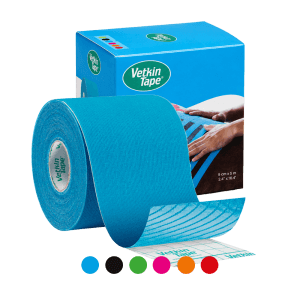
VetkinTape® 6cm
€13.95In stockSelect options This product has multiple variants. The options may be chosen on the product page
Joints & tendons
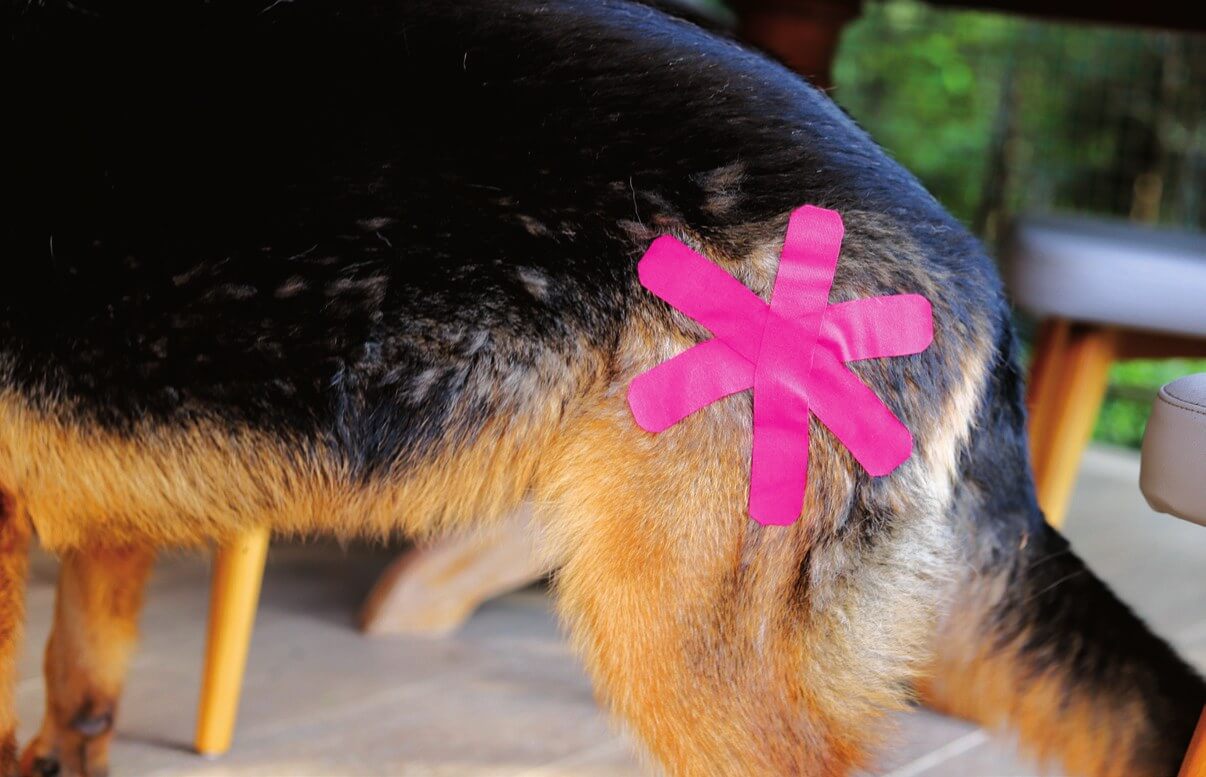
Hip Joint Pain: The Star Technique
A simple star-shaped application for localised, already-diagnosed hip and coxofemoral joint pain, such as osteoarthritis or hip dysplasia.
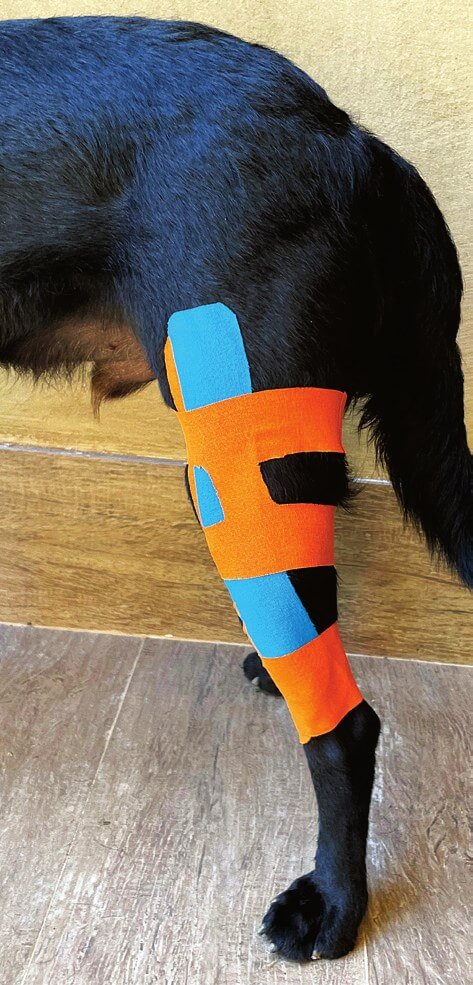
Cranial Cruciate Ligament Disease (CCLD)
What CCLD means for your dog, when taping helps, and the Double H technique for stifle (knee) stability.

Medial Patellar Luxation
Supporting a straighter path for the kneecap in grade I–II patellar luxation, plus quadriceps facilitation.

Patellar Ligament Desmopathy
Easing pain from a thickened patellar tendon, often seen after CCLD osteotomy surgery such as TPLO.

Carpal Hyperextension
Supporting a dropped wrist (carpus) with a secure distal anchor woven between the pads.

Biceps Brachii Tendinopathy
A Y-shaped application along the biceps brachii tendon for shoulder and forelimb tendon pain.

Joint Pain: The X Technique
A quick, versatile crossed application for general pain in smaller joints such as the wrist or elbow.
Skin & swelling
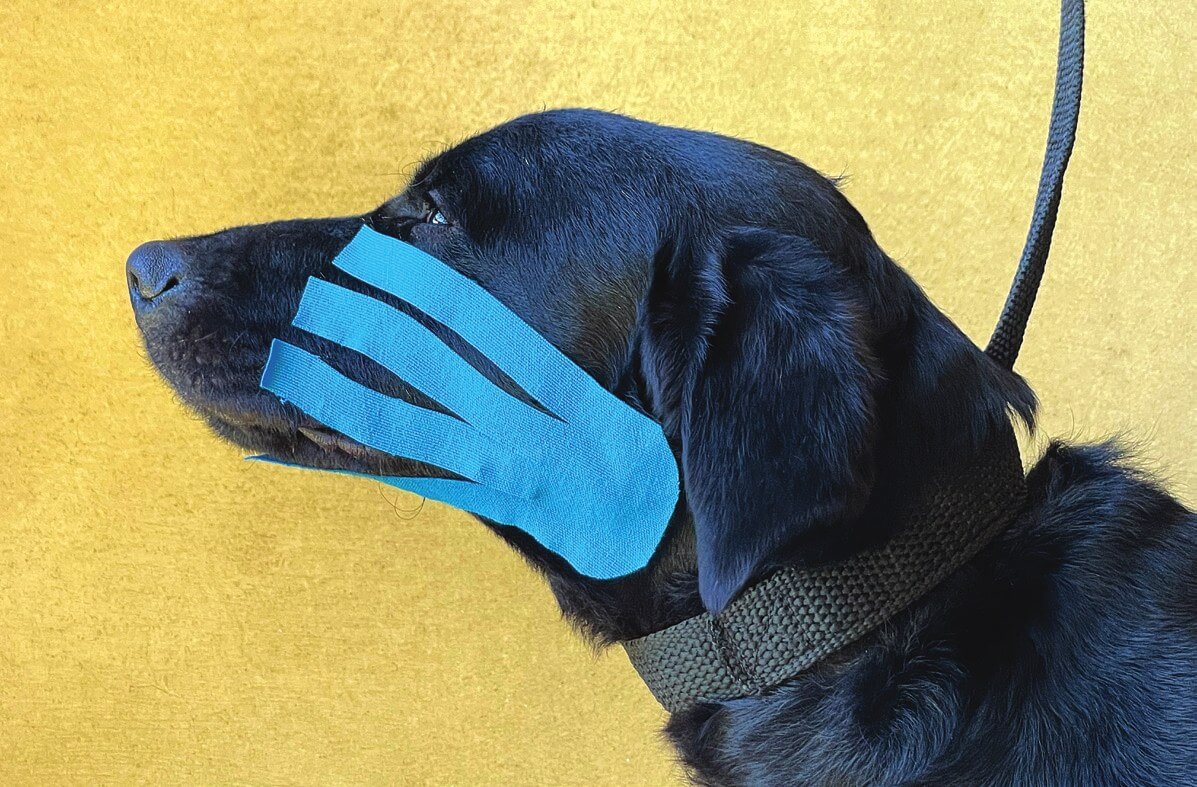
Facial Oedema
Directing facial swelling towards the nearest lymph node with the Lymphatic cut, e.g. after dental surgery or an insect bite.

Digital Pad Wounds
Protecting a healing paw pad wound and keeping gauze or ointment securely in place during normal movement.

Scar Tissue
Crisscrossed strips that create lines of tension to help restore movement to the fascia beneath a healed scar.
Movement & muscles

Improve Proprioception
Supporting dogs that drag their hind limbs with the Lymphatic or I-shape cut, applied proximal to distal.
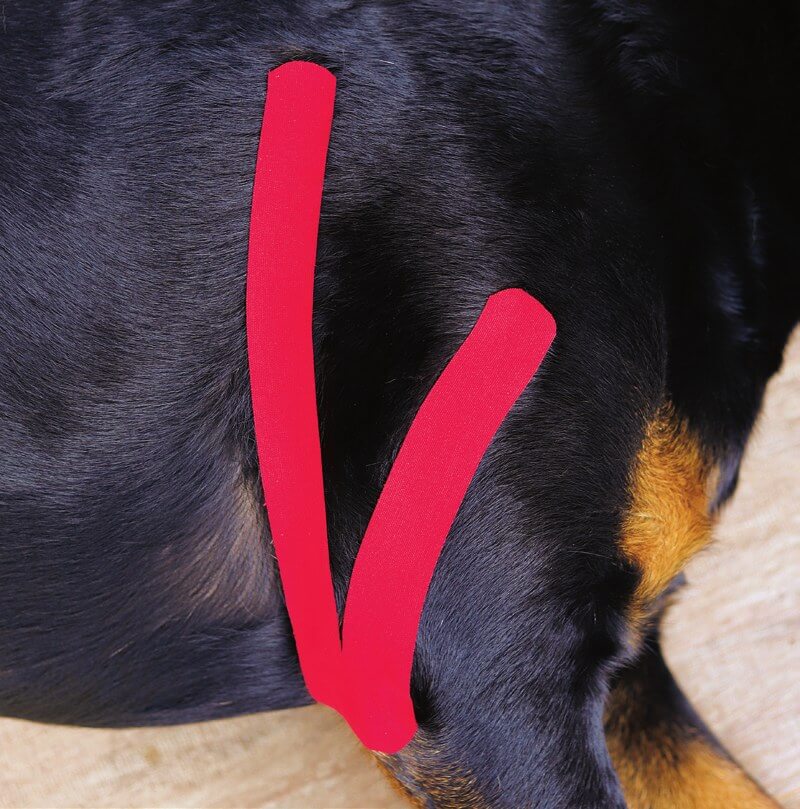
Kinesiology Taping for Muscles: Reference Guide
A visual reference covering ten commonly taped muscles, from erector spinae to quadriceps. 10 muscles covered.

Swimming Puppy Syndrome
Gently bringing a puppy’s splayed legs closer together with a joined tape loop, as a supportive aid.

Kinetic Lines
Background on the Superficial Dorsal and Ventral fascial chains, and why they matter for taping.
Reference guides
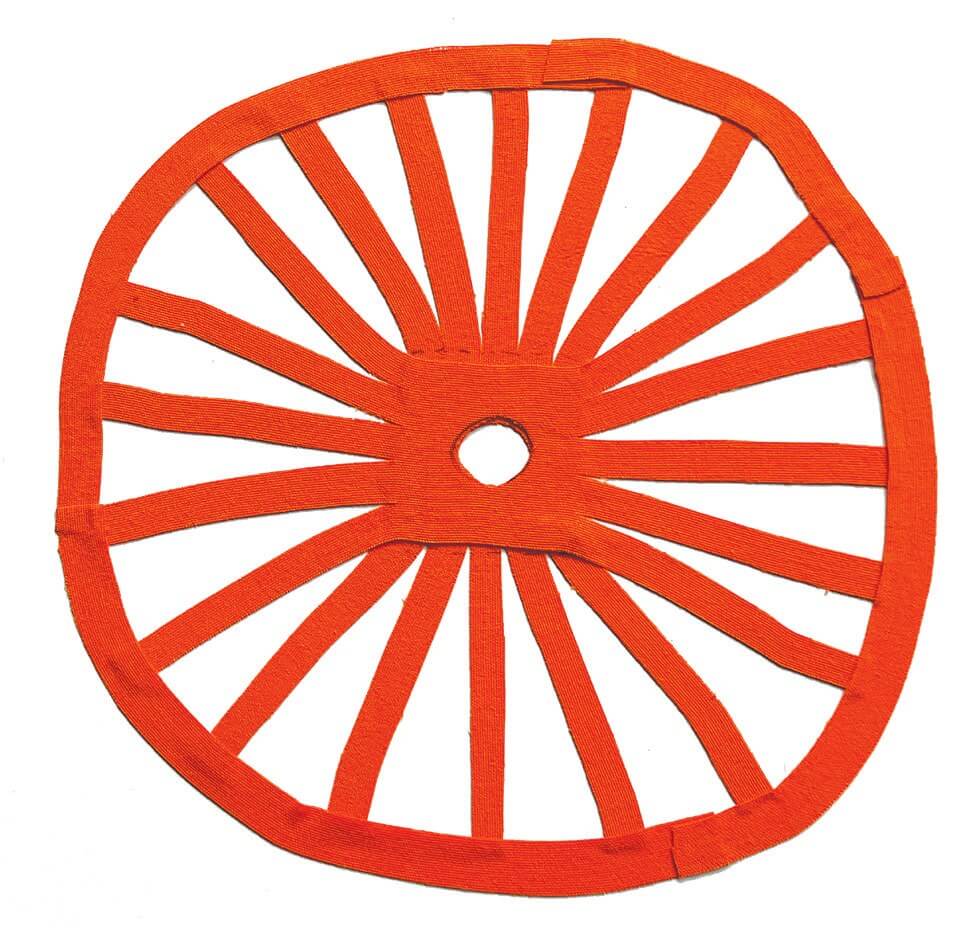
Tape Cuts & Shapes: Full Reference Guide
Every kinesiology tape cut used across our guides – I, Y, V, X, H, O, Lymphatic, Web, Basket and combination techniques. 13 shapes covered.
Recommended taping products
-
VetkinTape® 6cm
€13.95In stockSelect options This product has multiple variants. The options may be chosen on the product page -
VetkinTape® 10cm
€19.95In stockSelect options This product has multiple variants. The options may be chosen on the product page -
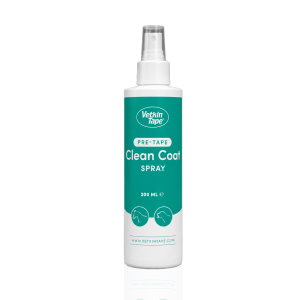
VetkinTape® Clean Coat Pre-Tape Spray
€11.95In stockAdd to cart -
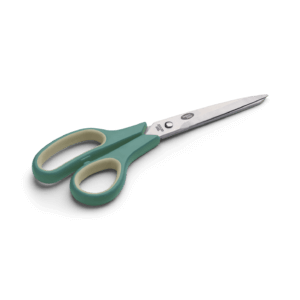
VetkinTape® Soft Touch Scissors
€12.95In stockAdd to cart
Disclaimer: Please note that applications provided on our website are not clinically proven. All mentioned applications are based on extensive evaluation and case studies with licensed veterinarians and/or canine physiotherapists.
Always have the underlying cause of lameness, pain or swelling diagnosed by a veterinarian before applying tape. Do not tape over open wounds, skin irritation, suspected fractures, or oedema caused by a cardiac or renal problem without veterinary guidance.